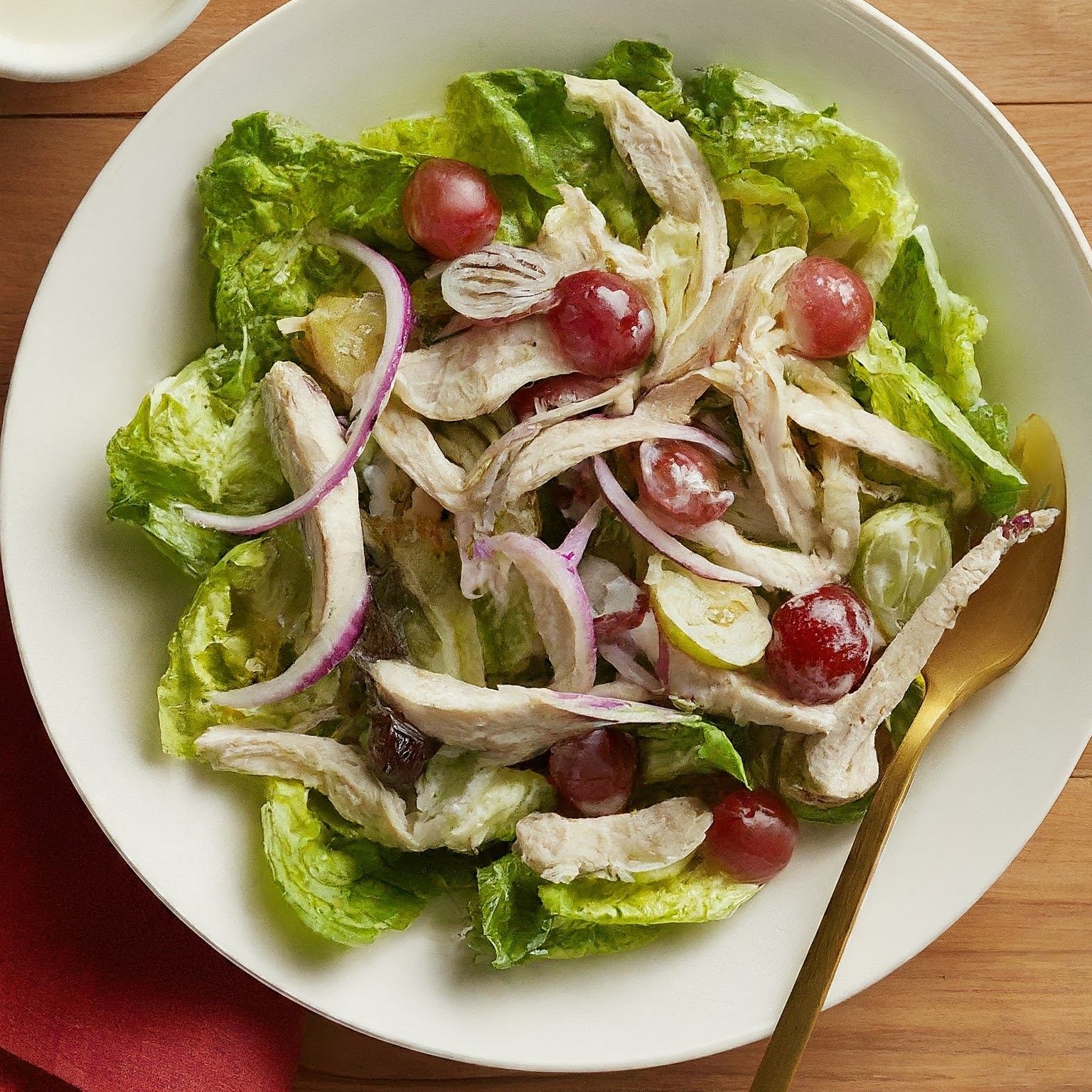
Classic Chicken Salad


Classic Chicken Salad

The history of chicken salad dates back to the early 19th century, originating in the United States. The dish's roots are linked to European settlers who brought their love for mayonnaise-based salads, like potato salad and egg salad, to the New World. These settlers soon discovered that shredded or diced chicken made an excellent base for a similar type of salad.

The first known American chicken salad was served in 1863 by a meat market in Rhode Island called Town Meats. The owner, Liam Gray, mixed leftover chicken with mayonnaise, tarragon, and grapes. This creation was so popular that it turned the meat market into a delicatessen. From there, chicken salad spread across the country, evolving into the classic recipe we know today

Chicken salad gained widespread popularity due to its versatility and ease of preparation. It became a staple in American households, perfect for sandwiches, serving on a bed of lettuce, or as a dip with crackers. Over the decades, the recipe has been adapted to include various ingredients, catering to regional tastes and preferences.

How to Prepare Classic Chicken Salad

Preparing classic chicken salad is straightforward and can be tailored to personal tastes. Here’s a timeless recipe that highlights the simplicity and deliciousness of this dish.

Ingredients

2 cups cooked chicken breast, shredded or diced

1/2 cup mayonnaise

1/4 cup finely chopped celery

1/4 cup finely chopped red onion

1 tablespoon lemon juice

1 teaspoon Dijon mustard

Salt and pepper to taste

Optional: 1/4 cup sliced grapes, 1/4 cup chopped apples, or 1/4 cup chopped nuts (such as pecans or almonds)

Procedure

Prepare the Chicken: If not already cooked, boil or bake chicken breasts until fully cooked. Allow them to cool, then shred or dice into small pieces.

Mix the Base: In a large bowl, combine the mayonnaise, lemon juice, and Dijon mustard. Mix until smooth.

Add the Vegetables: Stir in the finely chopped celery and red onion. These ingredients add crunch and flavor to the salad.

Combine with Chicken: Add the shredded or diced chicken to the bowl and mix until the chicken is well coated with the mayonnaise mixture.

Season: Add salt and pepper to taste. Adjust the seasoning based on your preference.

Add Optional Ingredients: If desired, stir in grapes, apples, or nuts to add extra flavor and texture.

Chill: Cover the bowl and refrigerate for at least 30 minutes. This allows the flavors to meld together.

Serve: Chicken salad can be served in a variety of ways. Spoon it onto a bed of lettuce, spread it on bread for sandwiches, or serve it with crackers.

Preparation Time

Preparation Time: 20 minutes

Cooking Time: 20 minutes (if cooking chicken from scratch)

Chilling Time: 30 minutes

Total Time: 1 hour 10 minutes

Comments

Popular Posts

Elevate Your Meal Prep with This Easy Instant Pot Cauliflower Soup Recipe

Cauliflower Soup is a comforting dish made from cauliflower, broth, onions, garlic, and seasonings, often blended into a smooth and creamy consistency. The Instant Pot version is a modern adaptation that reduces cooking time while preserving the soup's rich flavor and nutritional value. The history of cauliflower soup begins with the history of cauliflower itself. Cauliflower is believed to have originated from wild cabbage cultivated in the Mediterranean region over 2,000 years ago. Ancient civilizations, including the Greeks and Romans, grew early varieties of cauliflower and appreciated the vegetable for its versatility and nutritional value. During the Middle Ages, cauliflower spread throughout Europe, becoming especially popular in countries such as Italy, France, and England. European cooks commonly prepared cauliflower by boiling, roasting, or incorporating it into soups and stews. Cream-based vegetable soups gained popularity during the 17th and 18th centuries, particularly...

From Feast to Flavor: How to Make the Perfect Leftover Turkey Soup

Leftover Turkey Soup is a hearty, nourishing soup traditionally made from cooked turkey left over after holiday meals. It is especially popular in the United States and Canada following Thanksgiving and Christmas celebrations, when families seek delicious and economical ways to use leftover roasted turkey. The soup is celebrated for transforming leftovers into a flavorful, wholesome meal while minimizing food waste. The history of Leftover Turkey Soup is closely connected to the traditions of roasting whole turkeys for festive occasions. Turkeys are native to North America and were domesticated by Indigenous peoples in present-day Mexico more than 2,000 years ago. Indigenous communities raised turkeys not only for food but also for their feathers, which were used in clothing, ceremonial attire, and decorations. When European settlers arrived in North America during the 16th and 17th centuries, they adopted many Indigenous food practices, including cooking and eating turkey. Over time, ...

From Farm to Table: The Best Ingredients for Homemade Pumpkin Soup

Pumpkin Soup is a comforting and nutritious dish made from pumpkin, vegetables, herbs, and seasonings. Known for its smooth texture, vibrant orange color, and naturally sweet flavor, Pumpkin Soup is enjoyed in many countries, particularly during the autumn and winter seasons. It is often served as a starter or a light main course and has become a favorite comfort food around the world. The history of Pumpkin Soup is closely tied to the history of the pumpkin itself. Pumpkins originated in Central and South America, where they were first cultivated by Indigenous peoples more than 7,500 years ago. Archaeological evidence suggests that pumpkins were among the earliest domesticated crops in present-day Mexico. Indigenous communities valued pumpkins because they were nutritious, easy to grow, and could be stored for long periods. Long before European exploration, Native American tribes prepared pumpkins in various ways, including roasting, boiling, drying, and incorporating them into soups ...

Hodge Podge Soup: A Versatile Dish to Satisfy Your Culinary Cravings

Hodge Podge Soup is a hearty soup made from a variety of fresh vegetables, herbs, and often meat or dairy. True to its name, "hodge podge" refers to a mixture of different ingredients combined into one satisfying dish. The soup is celebrated for its versatility, seasonal freshness, and nourishing qualities, making it a beloved meal in several cultures, particularly in Scotland. The term "hodge podge" is believed to have originated from the old French word hochepot , meaning "mixed stew" or "potpourri." Over time, the word entered the English language and came to describe any mixture of different ingredients or ideas. In cooking, it referred to soups and stews made by combining whatever fresh ingredients were available. The most well-known version of Hodge Podge Soup comes from Scotland, where it has been prepared since the 17th and 18th centuries. Scottish Hodge Podge was traditionally made during late spring and early summer when newly harveste...

Nutrient-Packed and Delicious: Why Stuffed Pepper Soup Should Be Your Next Meal

Stuffed Pepper Soup is a hearty, comforting soup inspired by the classic stuffed pepper dish. It combines the traditional ingredients of stuffed peppers—ground beef, bell peppers, rice, tomatoes, onions, and herbs—into a rich tomato-based broth. The soup delivers all the familiar flavors of stuffed peppers while being easier and quicker to prepare. The origins of Stuffed Pepper Soup are closely tied to the history of Stuffed Peppers, a dish that has been enjoyed across Europe, the Mediterranean, and the Middle East for centuries. Stuffed vegetables have long been a feature of traditional cuisines, with recipes varying by region and available ingredients. The practice of stuffing peppers became widespread after bell peppers were introduced from the Americas to Europe in the 15th and 16th centuries following the voyages of European explorers. As peppers became widely cultivated, cooks began filling them with rice, meat, herbs, and vegetables before baking them. Many countries developed t...